Project Brief
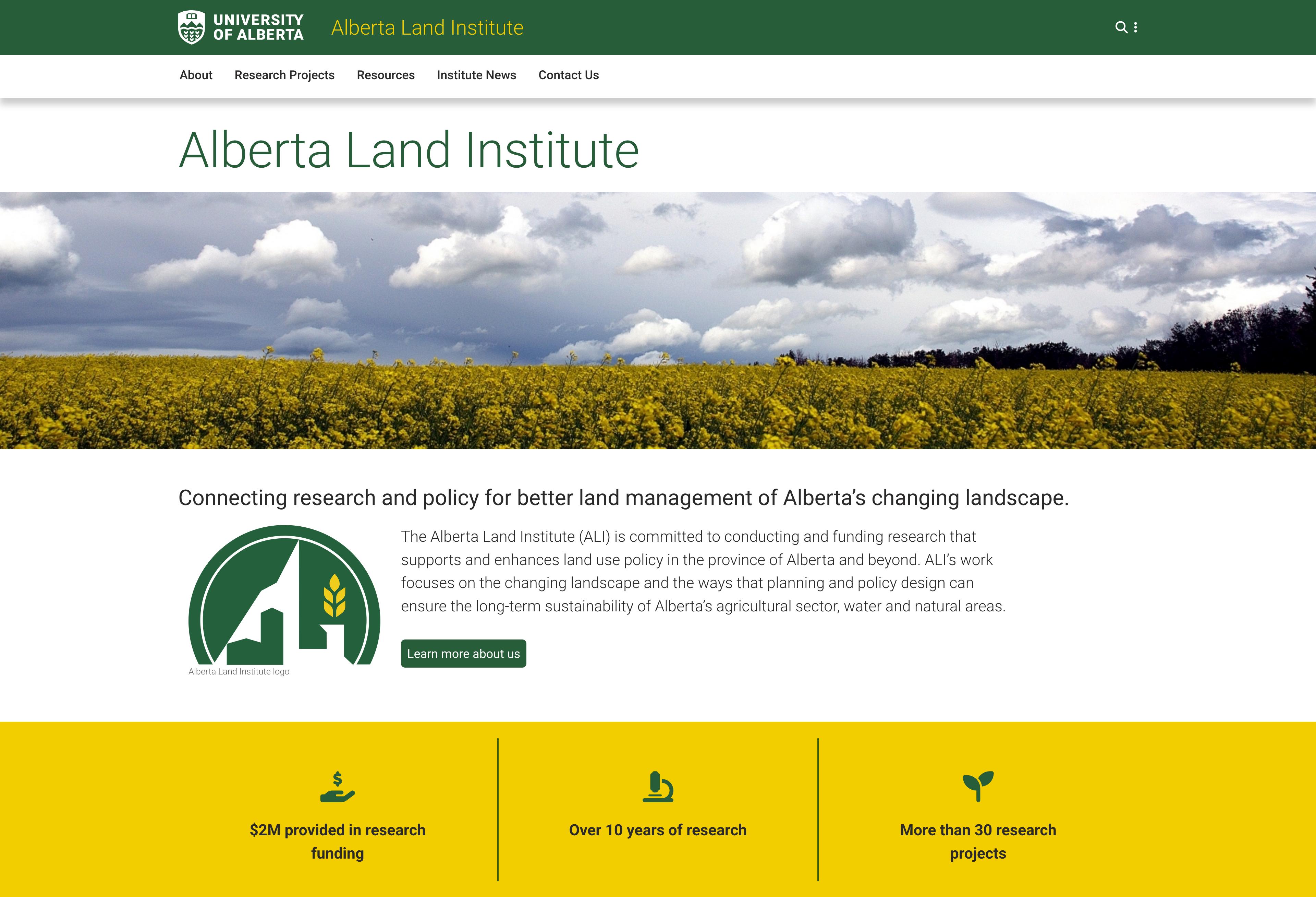
The Alberta Land Institute website refresh aimed to make research information more accessible and better aligned with the University of Alberta's overall brand and design. The original website was dated and not fully in step with current university standards, prompting a full migration and content overhaul within Cascade CMS.
Problem
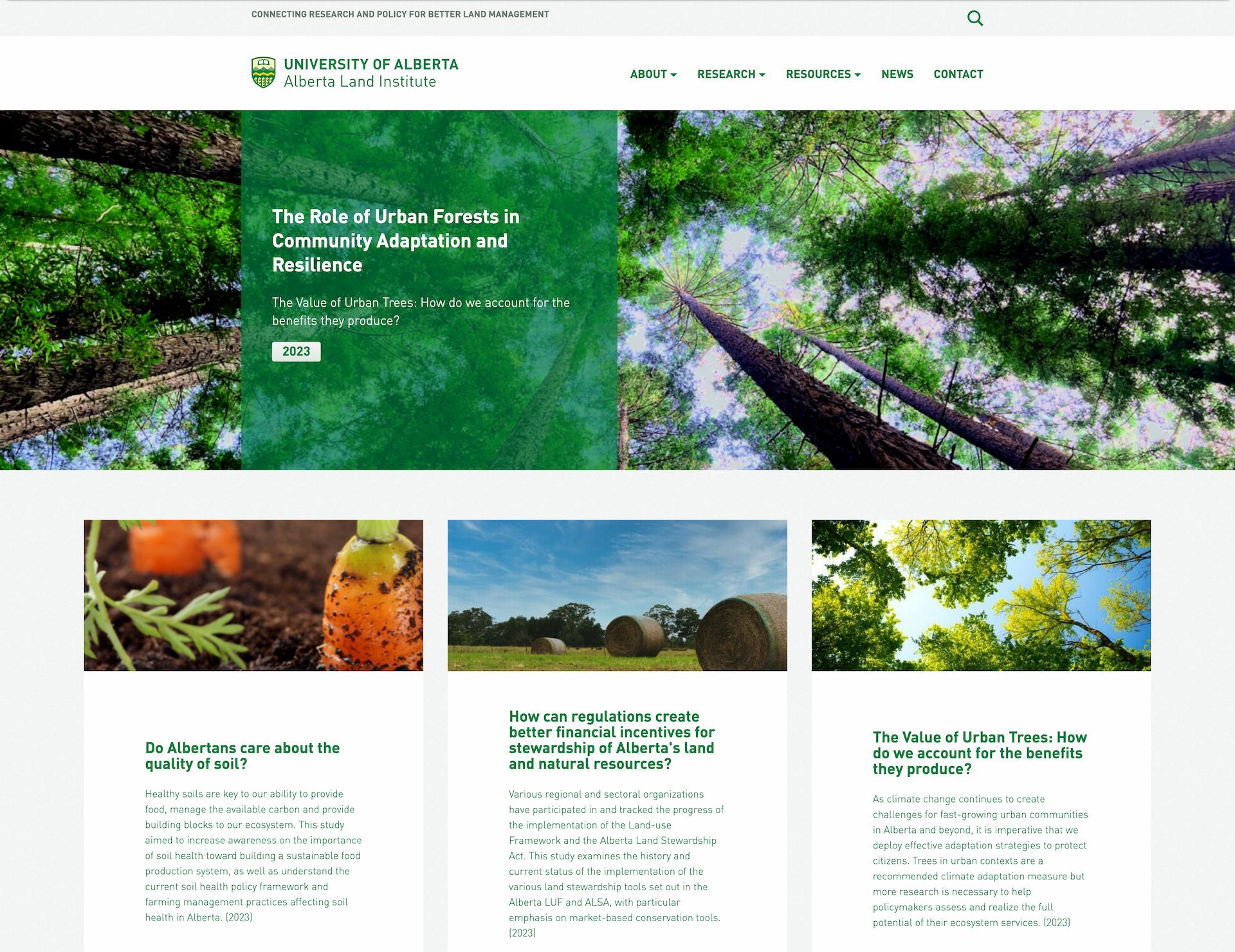
The Alberta Land Institute's previous website was visually different from the University of Alberta's branding. The structure and presentation of their research content (particularly the metadata tied to scientific reports) was difficult to navigate and not designed for accessibility or responsiveness. Given the importance of their research in shaping land use policy, it was vital to present this information in a way that was both user-friendly and professionally consistent with the broader university ecosystem.
Goals
The goals were to create a clean, accessible site that displayed scientific information in a straightforward, user-friendly way. In particular, the project aimed to improve how research metadata was presented, ensuring clarity across devices and audiences.
Limitations
The project faced a significant time crunch. Initially scoped to be a six-week effort, we ended up completing the entire redesign and migration in just over two weeks in mid-December 2024. This was largely due to the need to finish before the winter holiday break. Additionally, content migration required careful decision-making: the Alberta Land Institute had accumulated a wealth of research projects and news items over the years, and not everything could or should be migrated. We had to define a cut-off point for what content would be migrated and prioritize what would be included.
Timeline
The project took place over approximately 2.5 weeks in December 2024 and was completed just before the university's holiday closure.
Tools and Technologies
We used a mix of tools to move quickly:
- Pen and paper for initial wireframes
- Rapid prototyping in the browser with Cascade CMS for layout decisions
- Google Sheets to organize metadata for research projects and to support filterable/sortable data lists (FSDLs)
- Cascade CMS to build the final site + Bootstrap as a responsive framework
Team
I led the project as the primary developer and coordinator. The content manager (my supervisor) scoped out the initial project goals and deliverables. I worked closely with the Alberta Land Institute's Communications Officer and their Communications Partner to coordinate efforts. Two fellow content coordinators helped implement page builds, and an intern assisted with migrating news content.
Skills Used
- Project management and delegation
- Client and team communication
- UX design and responsive web development
- Information hierarchy and metadata organization
- Content migration and CMS configuration
- Quality assurance and layout templating
Process
The communications officer at the Institute, Aysha Wu, did a fantastic job upfront by consolidating ALI's existing site content (images, pages, research reports, news briefings, and even transcripts for podcast episodes) and organizing them in Google Drive. This provided a strong foundation for identifying what content needed to move and how it should be structured.
Once Aysha and my supervisor confirmed the goals and deliverables, I was brought onto the project to lead execution. I assessed each section of content, especially focusing on the research project pages. Using semantic HTML and Bootstrap, I translated key reports into responsive pages that adhered to accessibility standards.
The main content types included a homepage, contact page, news section, and the research project pages. I defined layouts for each of these and delegated news page implementation to team members. One notable challenge was the migration of podcast content, where we brought over audio and transcript posts that met our inclusion criteria.
For me, a highlight of this project was designing the research project pages. As someone who started post-secondary in biology and often struggled with poorly laid-out scientific reports, this part of the project felt deeply personal. I broke down each project into key metadata components: title, documents, year, project status, principal investigators, collaborators, and a project overview. Everything was structured to be scannable and responsive across devices.
Outcomes
We launched the site successfully with a few days to spare before the holiday break. Content ownership has since transitioned fully to the Alberta Land Institute, and they now manage the site independently. We remain available for support if future issues arise.
The outcome is a modern, responsive site that better reflects the university's digital standards and dramatically improves access to research information.
Personal Significance
This was a rewarding project that allowed me to bridge my background in biology with my current design and development work. Redesigning how scientific report briefs are displayed gave me the opportunity to fix frustrations I had experienced as a student and create a better user experience for others navigating similar information.